
Slow fixtures across the building, wastewater surfacing over a trench, recurring high tank levels, or a soggy strip in dry weather can point toward the absorption area. One slow sink usually belongs to a fixture or branch line instead. Good diagnosis follows the wastewater path and stops at the first failed component.
Read the tank level before pumping erases the evidence
An unusually high liquid level can mean the outlet or field is not accepting flow. A normal level with a building backup can point upstream toward the inlet or building sewer. A low level may reveal a leaking tank. Photographing the level and checking both sides before pumping preserves useful evidence.
Pumping may create temporary storage, which is valuable during a backup, but the tank refills through normal household use. If the receiving soil is exhausted or saturated, the same symptom returns. Ask what the crew observed rather than treating an empty tank as proof of repair.
Boise-area soil changes from parcel to parcel
Treasure Valley deposits include sand, gravel, silt, and fine layers. Foothill properties add slope, cuts, shallow material, or fractured rock. Idaho therefore bases absorption sizing on observed texture and requires effective soil depth above limiting layers. A neighborhood nickname cannot substitute for the test-hole profile.
Standard fields are limited to sites at or below 20% natural slope. They also require room for two full-size fields, with the second area protected from buildings, paving, compaction, and vehicle traffic. A shed or driveway placed over that reserve can remove the least expensive repair option.
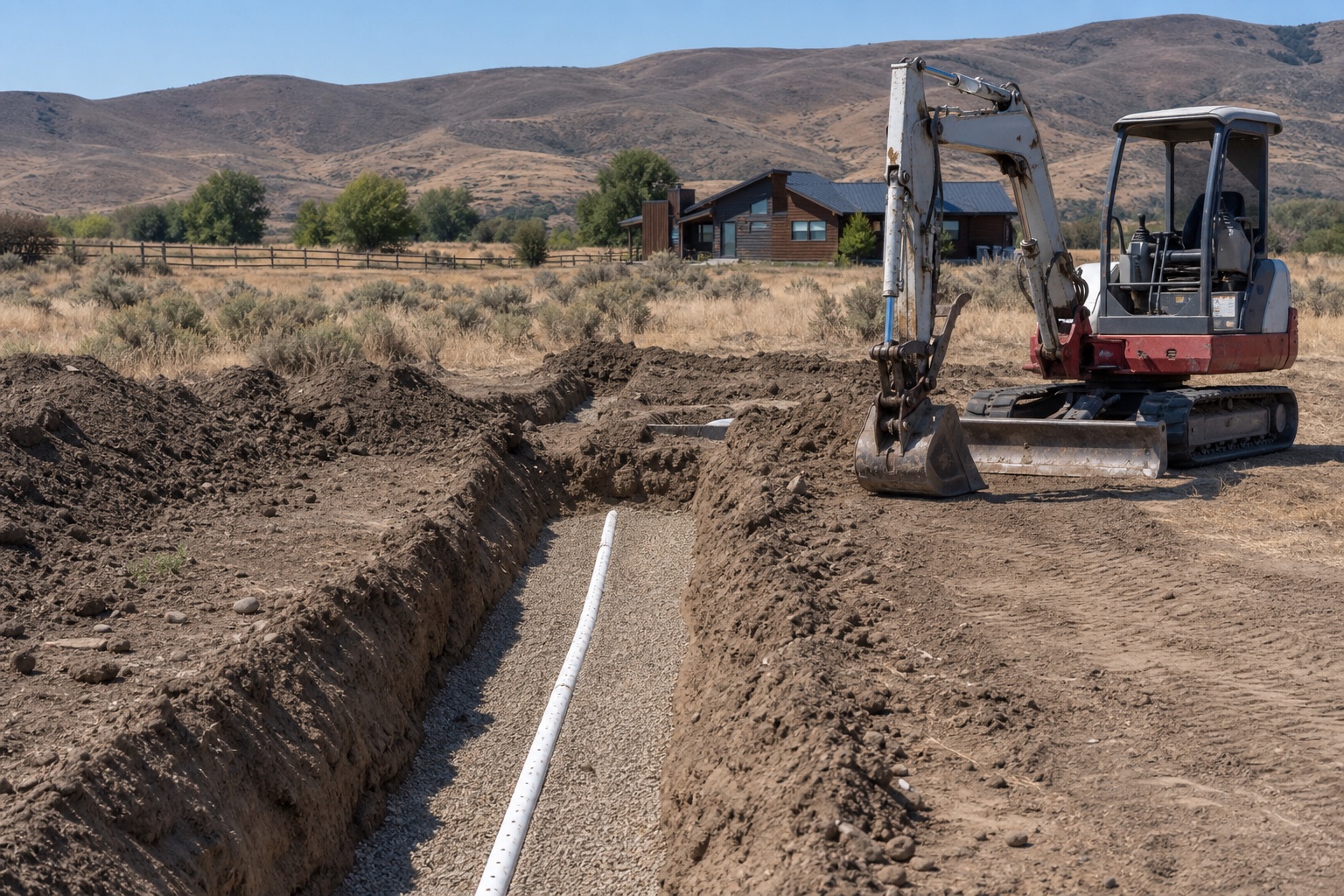
Repair can mean distribution work rather than a new field
Broken solid pipe, a damaged distribution box, clogged filter, failed dosing pump, stuck float, or root intrusion can starve one section or flood another. Those components deserve inspection before a replacement field is proposed. Idaho’s rules allow certain clogged or broken solid-pipe and electrical or mechanical repairs without expanding the system, although other requirements still apply.
A field with biomat overload or unsuitable soil needs a different response. Jetting, additives, or aggressive chemicals do not create new treatment capacity in compacted ground. Ask the inspector to identify the observed failure and tie the recommended scope to the permit record.
When pumping is the right call and when it is not
Pump when sewage is backing up and tank storage is needed, when accumulated solids threaten the outlet, or when the tank must be opened for diagnosis. Reduce water use until the cause is understood. Keep people and pets away from surfaced wastewater.
Do not hire a pump truck as the only answer to a field that repeatedly ponds after ordinary use. Do not drive excavation equipment across wet treatment soil. Idaho prohibits trench excavation when high moisture would smear and compact the soil, because the repair work can destroy the absorption surface it is meant to save.
A failing field requires health-district involvement
Idaho defines a failing system by loss of acceptance or wastewater reaching the ground surface or waters. The owner must obtain the necessary permit and repair it as soon as practical or as directed. In Ada and Boise counties, call CDH at 208-327-7499; Middleton-area rural work belongs to SWDH.
Call (208) 297-2198 with the address, tank level if known, last pump date, location of wet ground, recent irrigation, and whether symptoms affect every fixture. Those details help route a pumper, repair contractor, or permit conversation without selling excavation first.