
A new system begins with sewer availability, design flow, a complete plot plan, observed soil, groundwater evidence, and access. Buying a tank before the site evaluation reverses that order and can leave the owner with a component that does not fit the approved design.
Confirm onsite treatment is allowed
Idaho lets the director deny an individual-system application when public or central treatment is reasonably accessible. Check City and district sewer information for the parcel before paying for test holes or engineering.
For rural Ada and Boise County sites, CDH reviews the application. Middleton fringe projects use SWDH. A parcel across a county line can have similar soil and a different office, fee table, and application channel.
Design flow and site limits shape the system
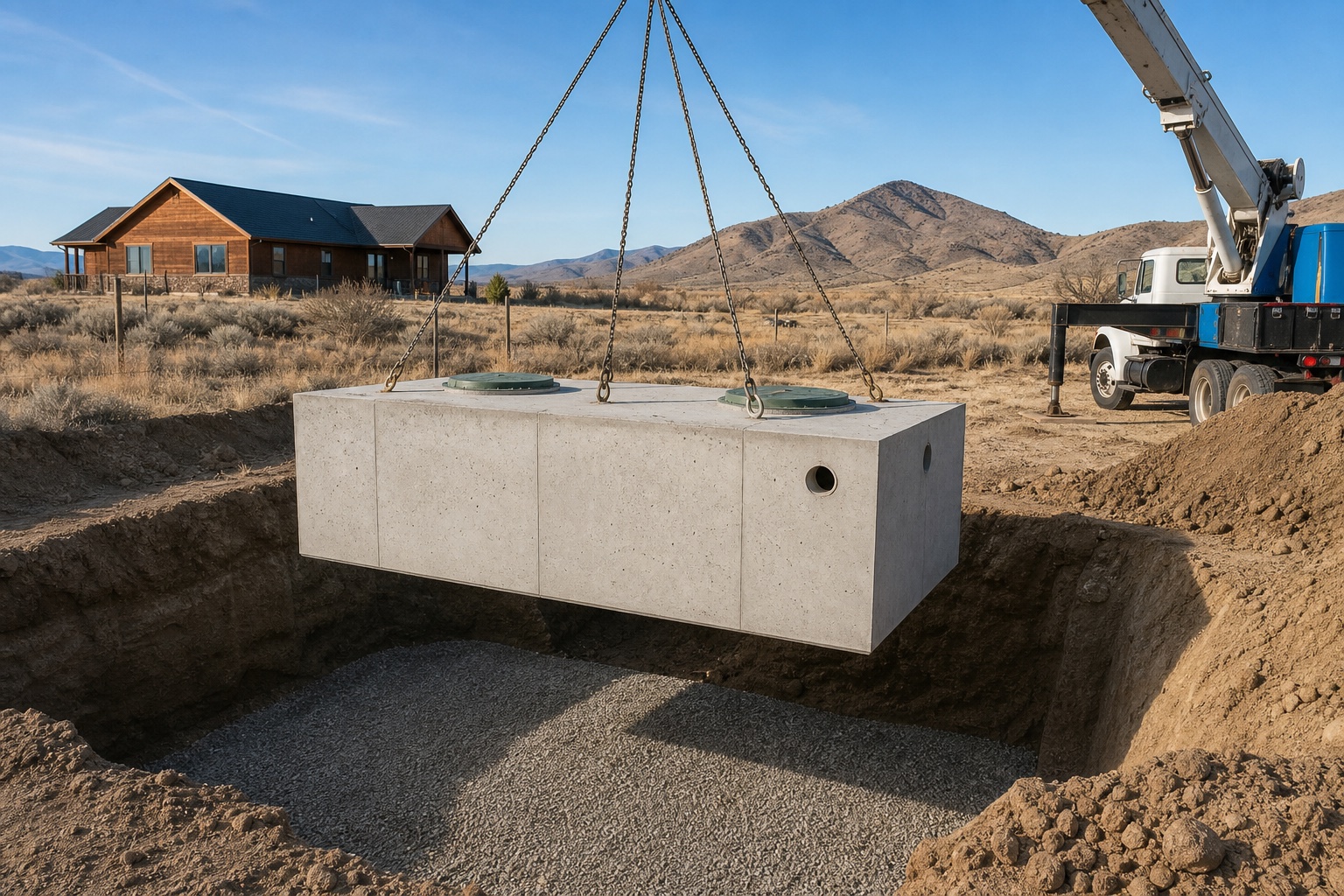
Idaho’s minimum tank capacity for a single dwelling is 1,000 gallons, with added capacity above four bedrooms. That minimum does not select the field type. Soil texture controls loading rate, while groundwater, impermeable layers, coarse material, slope, wells, surface water, and cuts control separation and feasibility.
Standard fields require a natural slope no greater than 20% and space for two complete absorption areas. Fine group C soils use a lower loading rate than sandy group A soils, so the same house can require a much larger field on a different parcel.
Alternative systems add operation duties
When a standard trench cannot meet the site, CDH may consider a basic or complex alternative described by DEQ guidance. Pressure distribution, extended treatment, sand mounds, and proprietary products add pumps, controls, maintenance, monitoring, or certified service requirements.
An extended treatment package needs annual operation and maintenance by a certified service provider, followed by monitoring and a report when required. Those recurring obligations transfer with ownership. Ask for lifecycle duties before choosing equipment.
Use the credential that matches the design
Hired Idaho installation requires a basic or complex installer registration appropriate to the system. Basic registration has limits; complex registration covers the broader alternative set. A septic pumper permit authorizes pumping and transport, not construction.
The installer should build from the current permit and approved materials. Changes in tank, trench location, component, elevation, or routing need agency acceptance before they disappear under backfill.
Inspection and as-built records finish the project
The permittee gives advance notice when CDH must inspect prepared work. A new system cannot receive wastewater until final inspection is complete, and the district supplies an as-built drawing. Keep that drawing with product manuals and service records.
Do not place a driveway, structure, pool, or compacted storage area on either field. Call (208) 297-2198 with the parcel, proposed bedroom count, sewer check, test-hole status, and any CDH correspondence so the contractor conversation starts at the correct phase.