
A sewage backup exposes people to pathogens and can damage finishes quickly. Keep occupants away from contaminated areas, avoid flushing or running appliances, and do not open a tank yourself. The first phone description should focus on what is happening now rather than guessing which component failed.
Reduce flow and protect people
Stop laundry, dishwashing, baths, and unnecessary toilet use. Keep children and pets away from wastewater. Avoid electrical equipment in a wet area and contact emergency services when there is an immediate life, gas, or electrical hazard.
If sewage reached living space, pumping the tank does not perform indoor remediation. Separate the septic service from cleanup and disinfection work. Photograph damage only when it can be done without exposure.
One fixture and every fixture point in different directions
A single slow sink or toilet usually suggests a local branch obstruction. Several fixtures gurgling or backing up, especially at the lowest drain, can implicate the building sewer or septic system. Ask whether the pump alarm sounded and whether wastewater is visible outdoors.
A high tank level points downstream; a normal tank with no inlet flow during fixture use points upstream. A service crew can preserve those observations before pumping, then create temporary storage if needed.
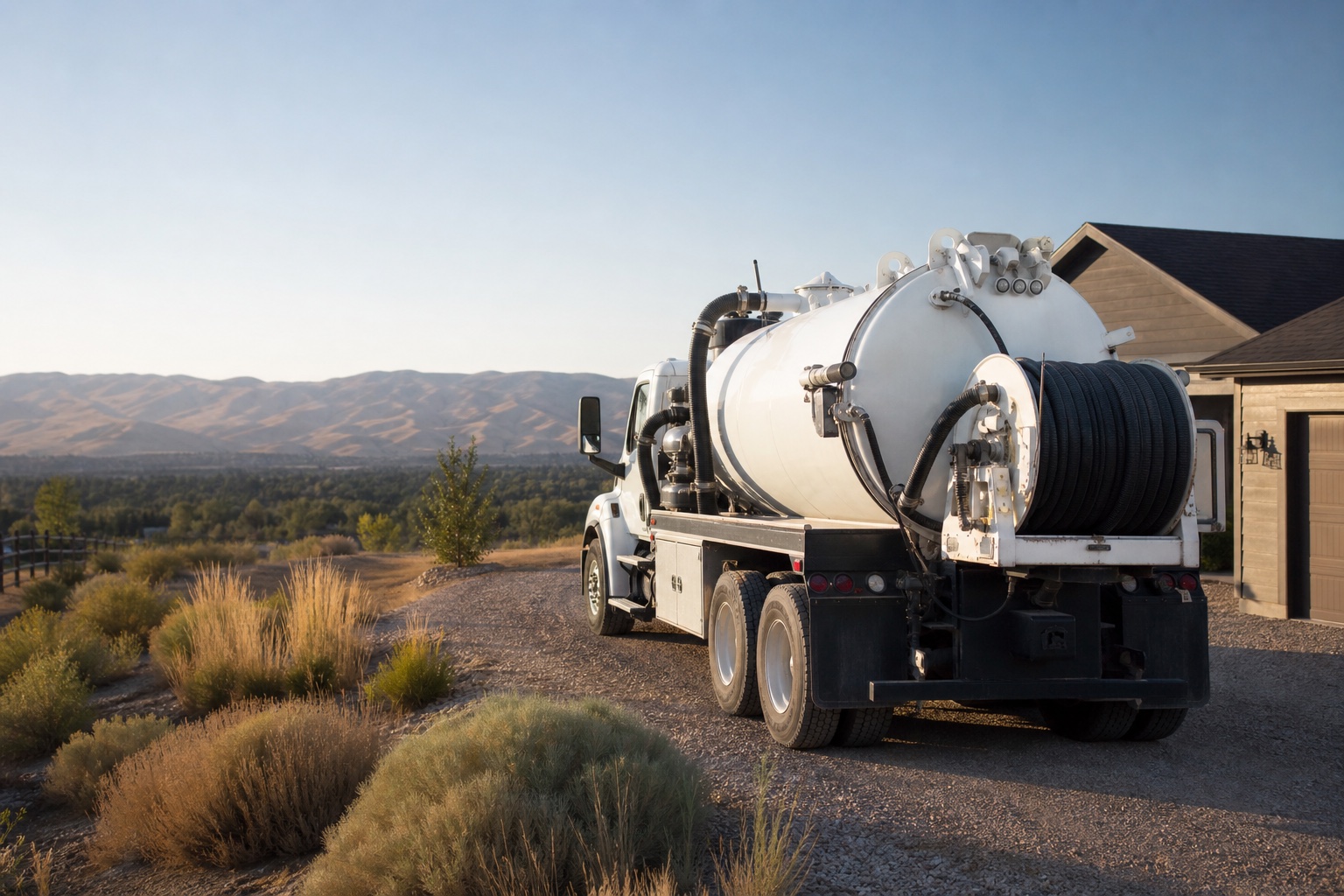
A pump alarm calls for water conservation
An alarm reports high liquid in a pump chamber or another monitored condition. Silence controls may stop the noise without correcting the level. Limit water and keep the alarm information available for the technician.
Power outage, tripped breaker, failed float, damaged cable, blocked discharge, or failed pump can produce similar symptoms. Electrical work must stay within the provider’s qualification. Never reach into a chamber to move a float.
Flooded or saturated soil changes pumping decisions
EPA advises against opening and pumping a tank while surrounding soil is flooded because water and silt can enter and an emptied tank can shift or float. Boise is semi-arid, yet river-adjacent ground, irrigation, snowmelt, or a broken water line can still saturate a site.
Describe standing water and recent irrigation before dispatch. Keep heavy vehicles off wet treatment soil. The crew may need to stabilize access, wait for safer conditions, or coordinate a different immediate measure.
Emergency service creates time, not a guarantee
A pump-out can remove waste and relieve pressure. It cannot promise that a field, line, or pump will accept the next day’s flow. Ask the crew to state the observed cause, remaining uncertainty, and next action.
Call (208) 297-2198 with the address, wastewater location, fixtures affected, alarm or power status, tank access, surface water, and whether the building can stop water use. No arrival-time promise is published; the dispatcher confirms availability.