
Kuna’s core and new subdivisions use city sewer; rural and agricultural-edge parcels still require address-level system checks.
First confirm the Kuna address uses septic
Kuna engineering standards address city sewer construction and require existing septic systems to be abandoned according to Idaho DEQ requirements when connection work reaches them. That confirms a transition pattern rather than a citywide septic market.
South and west of the developed core, larger rural parcels may still rely on wells and individual fields. Irrigation can influence seasonal groundwater evidence, and CDH may require monitoring into the April–October irrigation window.
Bring the record and the ground conditions together
Search the health-district record for tank size, compartments, field location, pump equipment, and the reserved replacement area. Older files may require a legal-description search or records request. Compare the drawing with additions, paving, shops, wells, and current access.
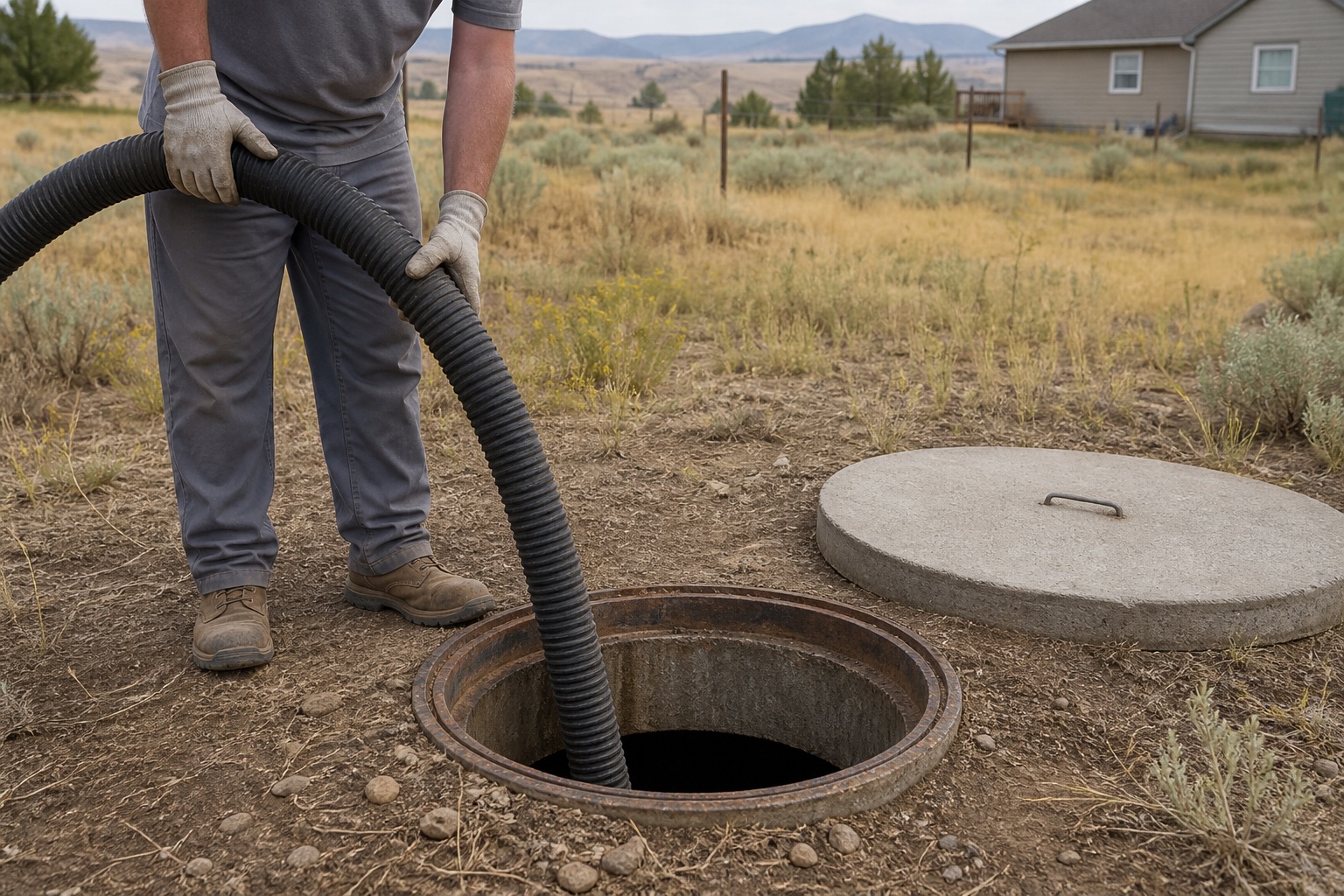
Tell the dispatcher whether the full manhole is exposed, how far it lies from firm parking, and whether irrigation, snow, gates, livestock, branches, or road grade restrict a heavy truck.
- Confirm City of Kuna sewer billing or availability
- Retrieve the CDH permit and field drawing
- Report irrigation and standing water before pumping
- Ask about abandonment records after a sewer connection
Use measurements instead of a calendar alone
Idaho DEQ describes three to five years as a common interval, while its technical guidance focuses on measured solids. Tank size, occupants, seasonal use, garbage-disposal use, and prior cleaning quality change the timing.
Ask the pumper to record removed volume, scum and sludge depths, baffle condition, and visible tank damage. Keep that ticket with the permit so the next service decision has evidence.
Pumping and repair use different scopes
An annual pumper permit covers pumping, transport, and disposal statewide. Installation and field construction require the appropriate Idaho installer registration and a health-district permit. A pump truck can create temporary capacity without repairing failed soil.
Whole-house backups, high tank levels, wet field ground, pump alarms, or unsafe covers deserve diagnosis. One slow fixture usually starts with a local drain check instead of septic pumping.
Permit contact for Kuna
Central District Health handles onsite permits and records here. Idaho DEQ writes IDAPA 58.01.03; CDH administers it locally. Idaho DEQ writes the statewide onsite wastewater rules. Central District Health permits and inspects systems in Ada and Boise counties; Southwest District Health handles Canyon County. A contractor does not issue the permit.
Idaho permits discharge to a public sewer or treatment plant and other disposal locations and methods approved by DEQ. The permitted pumper identifies its disposal sites and transports the load under those rules. Call (208) 297-2198 with the exact address, utility status, last pump date, lid access, route condition, and symptoms. Availability and travel are confirmed after the route is reviewed.