
A septic tank separates incoming wastewater into floating material, liquid, and settled solids. Capacity disappears as the upper and lower layers grow toward the outlet. Cleaning protects the drainfield by removing material before it escapes the tank and by exposing parts that cannot be judged through the lawn.
Measure before the contents are disturbed
The Idaho technical manual calls for determining scum and sludge depth after the cover is exposed. Those measurements reveal whether the tank reached a sensible service point and help set the next interval. A calendar alone cannot account for household size, disposal use, extra bedrooms, or a tank that differs from the permit drawing.
DEQ says pumping is needed before sludge occupies more than 40 percent of usable volume or scum reaches a baffle. It also describes three to five years as common guidance. A receipt with layer depths is more useful than a sticker containing only the date.
The floating mat has to be broken and mixed
A hose can pull liquid from below a stubborn crust while leaving much of the mat behind. Idaho guidance tells the pumper to lower the liquid six inches to a foot, break the scum with a suitable tool, mix it into the pumpable contents, and continue removing material. Backflow from the truck may be used to loosen bottom solids.
The operator must keep mixed sludge from rising into the outlet, where it could run directly toward the field. A few inches of residue can remain as bacterial seed. Disinfecting the tank interior is discouraged; cleaning means removing accumulated waste, not sterilizing concrete.
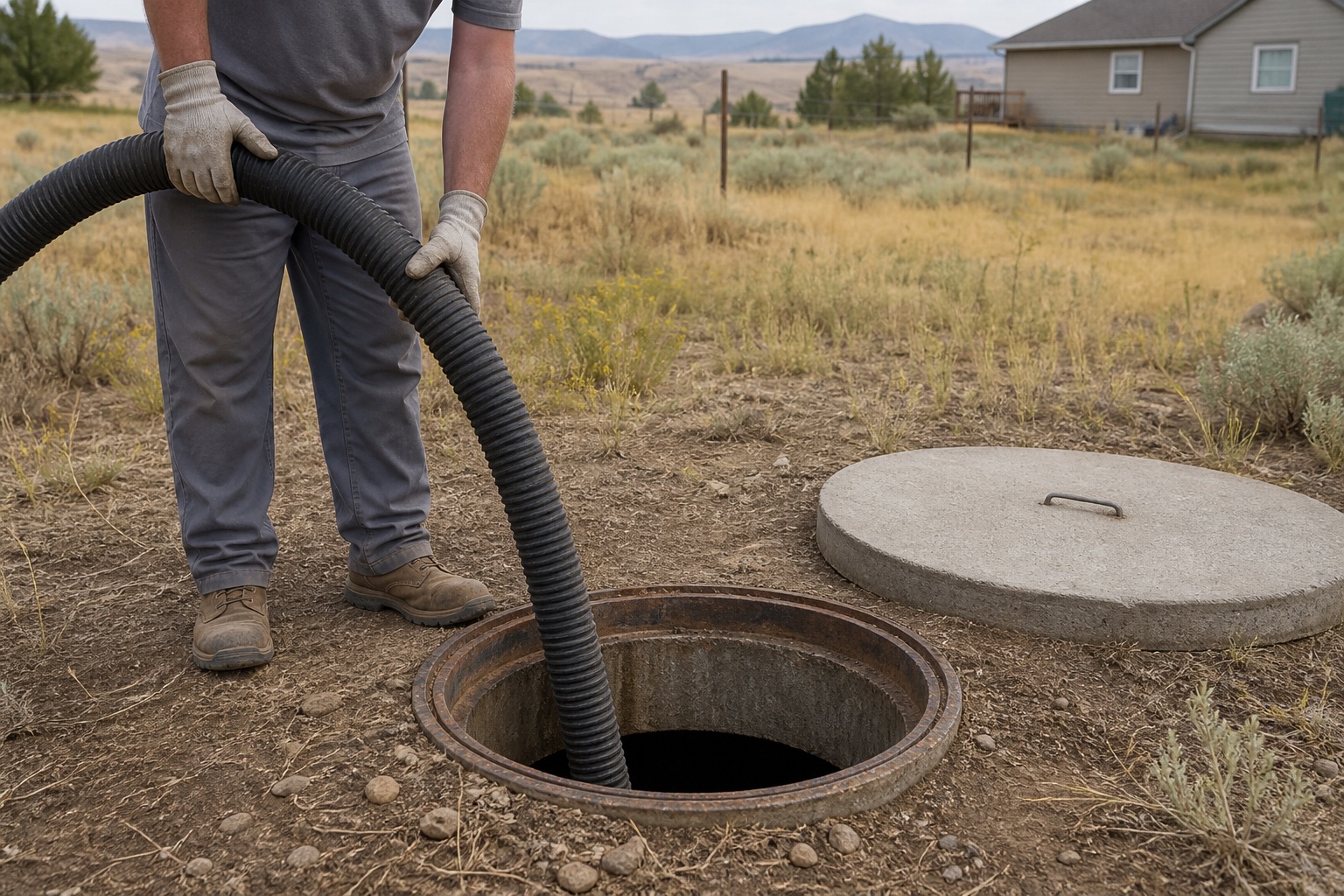
An empty tank makes component defects visible
The crew can look at inlet and outlet baffles, walls, floor, access cover, riser, and an effluent filter if present. A missing outlet tee allows floating material to leave. A damaged cover creates a fall hazard. Corrosion, roots, infiltration, or a leaking seam can explain a service interval that suddenly shortened.
Idaho’s manual calls for the receipt to record date, volume removed, layer depths, baffle condition, and visible wall or floor damage. Ask for observations in writing. Photos taken safely from above can support later repair decisions without reopening the tank.
Access changes the job before the truck arrives
Tell the dispatcher whether the full manhole is visible, how far it sits from firm parking, and whether gates, landscaping, snow, or irrigation-softened ground block a hose route. Idaho’s current tank standard brings manholes to finished grade, but older systems may have buried concrete covers.
A riser can reduce future digging, yet its installation and cover must be suitable for the tank and protected from unauthorized entry. Never enter a tank. Toxic gases and oxygen deficiency can kill without warning, even when the opening looks shallow.
The permitted pumper controls transport and disposal
Idaho permits discharge to a public sewer or treatment plant and other disposal locations and methods approved by DEQ. The permitted pumper identifies its disposal sites and transports the load under those rules. The pumper permit application identifies vehicles, disposal methods, and approved sites, and the permit number must remain visible on the truck door.
Call (208) 297-2198 with the property address, estimated tank size, last service date, lid access, hose distance, and current symptoms. A routine accessible tank is different from an unknown two-compartment system behind a soft mountain driveway.