
The first inspection task happens before a lid is opened: retrieve the permit, as-built drawing, and service history. The field location, number of tanks, design flow, alternative components, and replacement area change what must be found on the ground.
Records prevent an incomplete inspection
CDH’s online search includes records dating to 1971, with gaps in older Ada County files. Search by legal description when the street address fails. The drawing can reveal a second compartment, pump chamber, alternate field, or access location that surface clues miss.
Compare the record with additions to the house, extra bedrooms, shops with plumbing, pools, patios, driveways, and grading. Idaho does not allow increased flow beyond approved design without authorization, and the replacement area should remain undisturbed.
The tank tells a sequence of stories
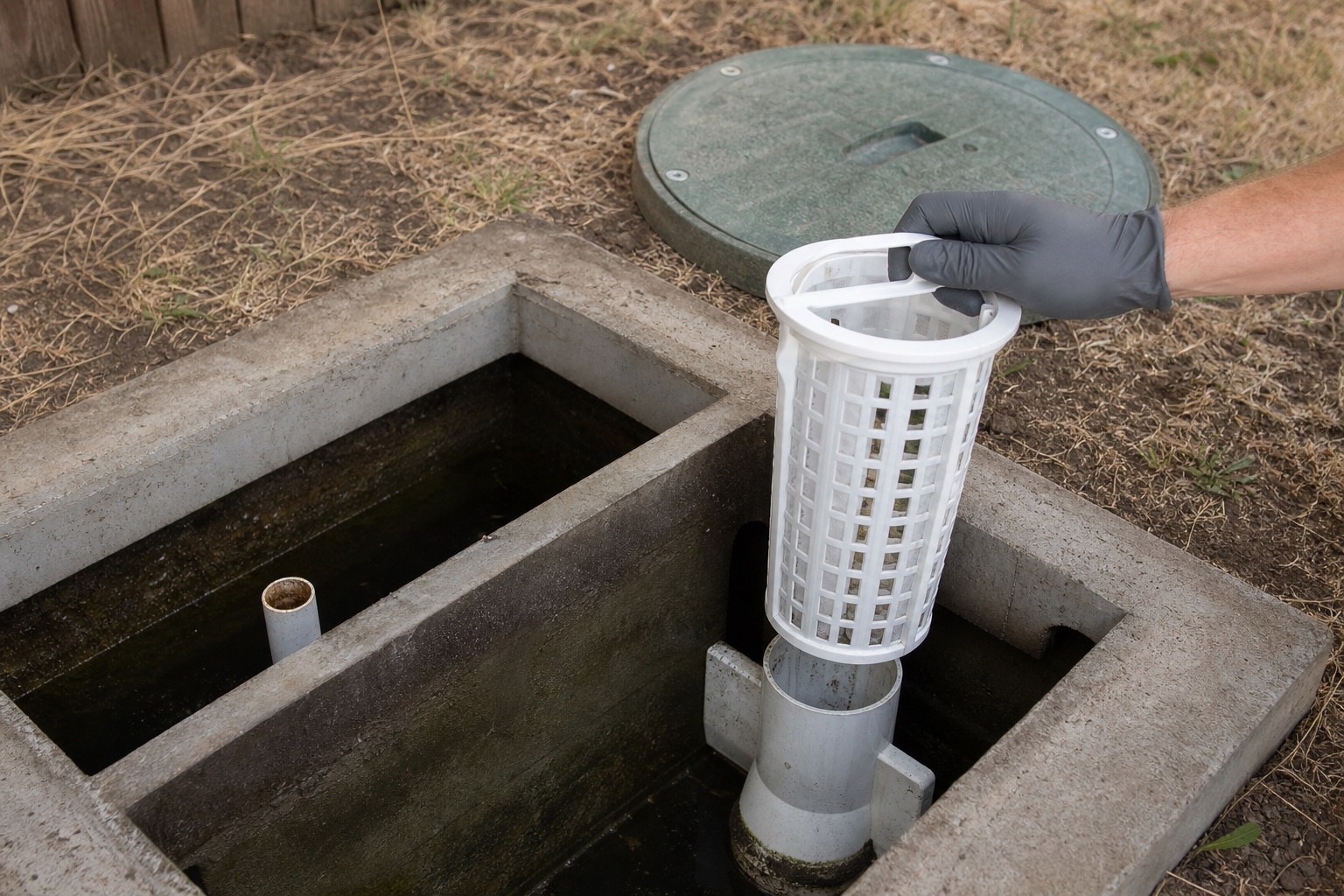
Liquid at the outlet elevation is normal. A high level suggests restriction downstream; a low level may suggest leakage. Solids depth shows maintenance need. Baffle, filter, wall, floor, lid, and riser condition show whether a repair belongs at the tank.
An inspection performed immediately after pumping loses the original liquid-level evidence but gains a clear view of structure. Decide whether the purpose is operational diagnosis, maintenance measurement, or an empty-tank condition check, then sequence the pump-out accordingly.
Walk the route from the building to the field
Look for settlement over solid pipe, sewage odor, wet or unusually lush bands, erosion, vehicle ruts, new structures, and irrigation concentration. Compare those observations with recent weather and water use. Boise receives modest annual precipitation, but irrigated lowlands can still hold shallow seasonal water.
Foothill lots deserve attention to cuts, scarps, slope, and runoff. A pump alarm or pressure field adds electrical panels, floats, and dosing behavior. Inspection scope should name which of those items were tested and which were outside the provider’s credential or access.
Inspection does not equal agency approval
Only the health district can issue or finalize an onsite wastewater permit. A service provider may inspect, pump, design, or install within its credentialed scope, but cannot promise agency approval. A contractor report describes observed condition on the inspection date. It cannot guarantee future performance, locate every buried defect, or revise the approved design.
For new work, failed-system repair, or a use change, contact CDH at 208-327-7499. For a property transaction, ask the lender whether it wants a contractor condition report, a pump receipt, a CDH mortgage survey, or some combination.
When an inspection adds value
Inspect when the maintenance history is missing, before purchasing a rural property, after recurring alarms, before adding occupancy, or when the yard has changed around the system. Routine layer measurement can prevent solids from reaching the field.
You may not need a broad inspection when one sink is slow and every other fixture works normally. Start with the local branch drain. Call (208) 297-2198 when multiple fixtures, tank alarms, field symptoms, or unknown records point to the onsite system.