
Fats, oils, grease, and food solids cool and separate inside an interceptor. When storage is consumed, material carries toward the building sewer and public system. Scheduled removal protects the line and provides records before an overflow or inspection exposes a missed interval.
Identify the device and waste before dispatch
A small indoor hydromechanical unit and a large buried gravity interceptor require different equipment. Provide capacity, number of compartments, cover location, access hours, parking constraints, and the last service report. Note whether the kitchen is operating and whether a backup is active.
Domestic pumper guidance excludes tanks receiving commercial or industrial waste from its definition of domestic septage. The contractor must use the authority, vehicle, and receiving route that apply to grease waste rather than assuming the household-septic route fits.
Service every compartment
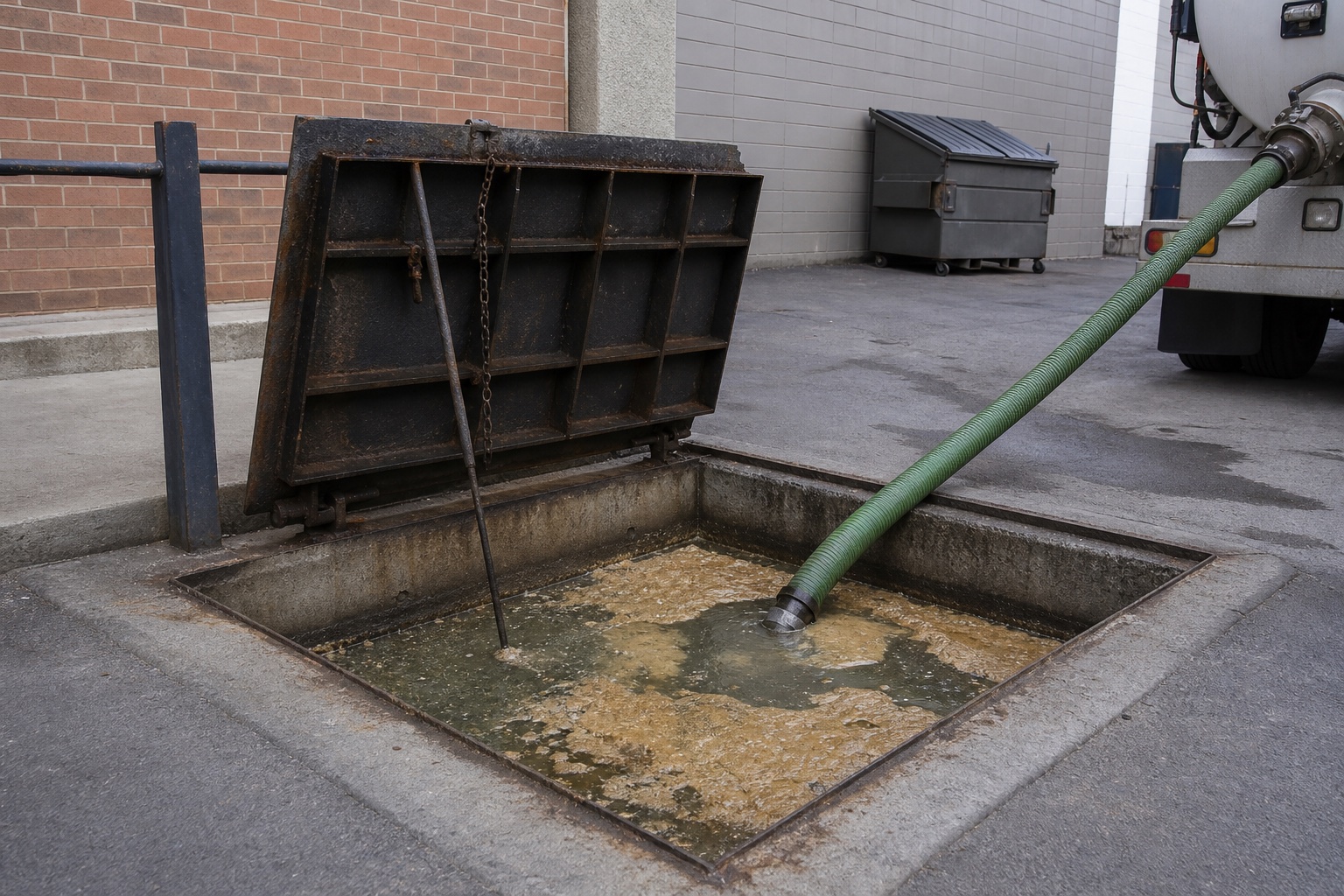
The crew removes the floating cap, liquid, and settled bottom material, then observes inlet and outlet fittings, tees, walls, covers, and unusual debris. Skimming the surface leaves much of the load behind. Pumping only the first compartment can hide carryover.
Ask the ticket to record volume, condition, service date, and disposal documentation appropriate to the route. Photograph accessible defects before the covers close.
Set intervals from accumulation and kitchen use
Menu, seating, operating hours, cleaning practices, interceptor size, and temperature change accumulation. A fixed citywide schedule may be too long for one kitchen and wasteful for another. Layer measurements and prior tickets reveal the site’s pattern.
Keep strainers in place, scrape cookware, collect fryer oil separately, and train staff to report slow floor sinks. Hot water and chemicals can move grease downstream without removing it from the wastewater system.
A backup may need line service as well as pumping
An overfull interceptor can restrict the outlet, but hardened grease in the building line may remain after the vessel is empty. Confirm flow before closing the job. If jetting is proposed, protect downstream equipment and collect removed material appropriately.
Indoor overflow cleanup is a separate sanitation task. Stop kitchen discharge, isolate the area, and follow food-safety procedures before reopening.
Boise properties can connect to different sewer districts
Confirm the property’s sewer authority and any local fats-oils-grease requirements. A Boise mailing address can sit in a neighboring service district. This site does not invent a universal municipal schedule or claim that domestic septic rules govern every interceptor.
Call (208) 297-2198 with the address, kitchen type, device capacity, access, last service date, current symptoms, and sewer provider. The dispatcher confirms whether an appropriately equipped contractor can accept the waste.